This guide explains how Vehicle Availability affects your chances of finding and buying a car on sale. It outlines what “available inventory” means, how to interpret listings from major official car trading websites, and how to compare pricing, condition, and incentives. It also provides a practical, step-by-step checklist for finding a cheaper car while staying objective and compliant with dealer processes.
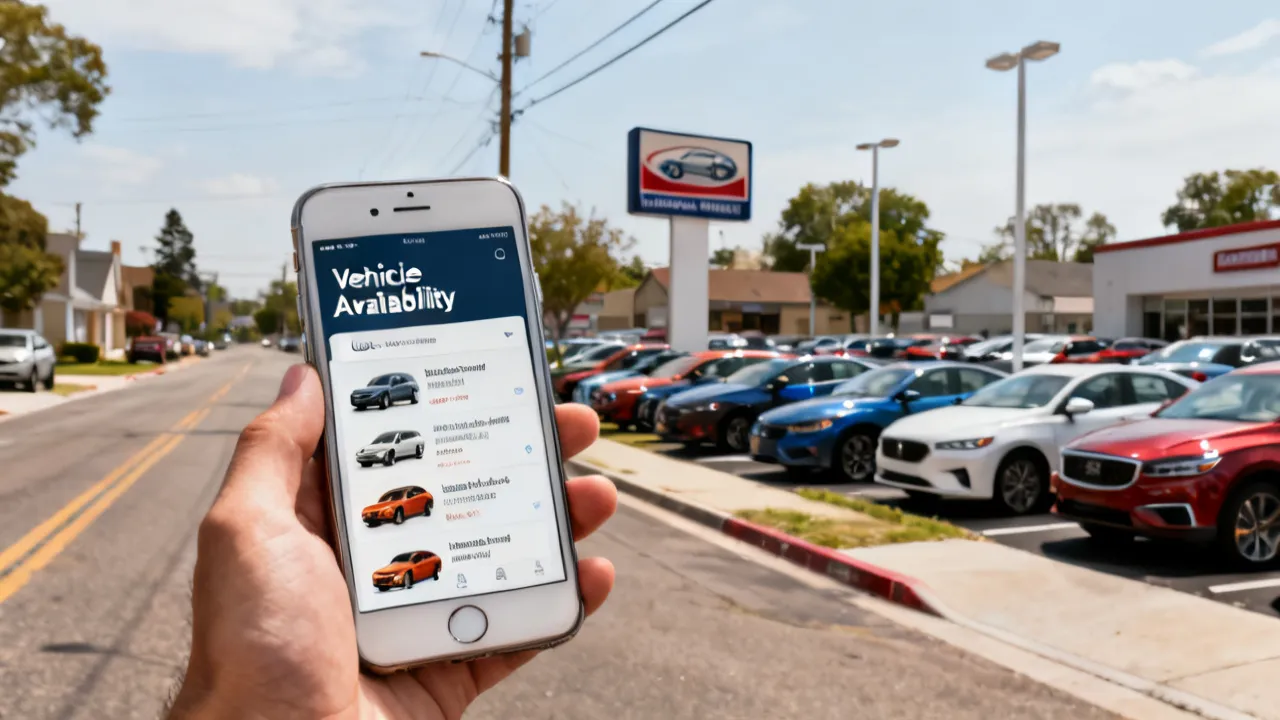
When shoppers search for a bargain, they often focus on the sticker price. Yet the more practical driver of whether you can actually buy is Vehicle Availability: what inventory exists right now, where it’s located, how quickly it can be reserved, and what the seller is willing to negotiate. For car buyers, availability is the gatekeeper that turns “advertised deals” into real options—especially when inventory changes daily.
From an industry perspective, Vehicle Availability is best understood as the intersection of three elements: (1) current listings and status (in stock, reserved, sold, pending delivery), (2) pricing transparency (whether the displayed price reflects fees/taxes and current incentives), and (3) operational speed (how quickly paperwork, financing, inspection, and delivery can be completed). If you ignore these, you may chase discounts that no longer match the seller’s current inventory.
Think of it like this: a sale price printed on a web page is only a promise, not a guarantee. Availability is what determines whether that promise can be fulfilled for your timeline, your eligibility, and your location. Two shoppers can see the same low price at the same time, but if one shopper confirms that the vehicle is currently reservable and the other waits a few days, the “deal” may evaporate—because the inventory moved to “sold” or the exact configuration was already reserved.
In used and new-car marketplaces, “availability” is not one single number—it’s a chain of signals. Even within the same category, two cars can be priced similarly but have different availability realities:
That is why buyers using Vehicle Availability filters or checking inventory frequently tend to find more relevant “on sale” opportunities than those who only compare prices once.
It also explains why many buyers report seemingly contradictory experiences: one buyer claims, “The deal was real,” while another claims, “It was never available.” In most cases, both people are describing the same listing at different moments, or the same listing under different eligibility assumptions. Vehicle Availability is the factor that resolves the contradiction: was the vehicle truly available to transact, and could the pricing be applied to the buyer’s situation?
For a more concrete interpretation, availability is essentially your answer to five questions:
When you treat those questions as the core of your shopping process, “on sale” becomes less like a marketing phrase and more like a practical route to an actual purchase.
To evaluate Vehicle Availability reliably, you want platforms that publish inventory listings and update them as vehicles move through the sales process. The following major official websites can help you observe real-time or near-real-time availability and “on sale” pricing patterns.
| Platform | What it helps you do |
|---|---|
| cars.com | Browse car listings by make, model, and location; compare dealer inventories and filter by availability signals. |
| CarMax | Search large used inventory and review vehicle details that affect availability and purchase readiness. |
| Caronsale | Explore listing-style browsing for vehicles advertised for sale and compare terms across offerings. |
| Autotrader | Use inventory-style browsing and deal-related search tools to locate vehicles for sale and track listing status. |
source: www.cars.com; www.carmax.com; www.caronsale.com; www.autotrader.com (source of information used in this article)
One of the biggest gaps between casual shoppers and experienced buyers is interpreting the listing language correctly. Many platforms and dealers use status tags that appear similar but can mean different things.
Here are common status meanings you’ll likely encounter:
The practical takeaway is that availability isn’t just whether a car is listed—it’s where it sits in the pipeline. A “pending” car might still become available if the buyer backs out, but you should not plan your budget and timeline on that outcome unless the seller confirms backup purchase options.
Experienced buyers often create a “probability mindset.” If a listing is “in stock,” probability is high. If it’s “pending,” probability is lower, and you treat it as an opportunity to request a backup position rather than a guarantee. If it’s “in transit,” probability depends on whether the seller can lock the VIN and whether the vehicle’s arrival date aligns with your ability to buy quickly.
Finding a cheap car is less about chasing a single “lowest price” and more about buying a vehicle that stays financially rational after you account for total costs and the reality of Vehicle Availability. Below is a step-by-step approach used by professional buyers and consultants.
Before you compare numbers, narrow down what’s actually purchasable. For each listing you like, confirm:
Availability often determines the final outcome: if the seller cannot deliver soon or cannot reserve the vehicle, you may lose the deal even if the price looks attractive.
A practical method is to treat your search like a funnel:
This avoids the common mistake of building a shortlist around cars that seem cheap but cannot be bought on your timeframe. When you find a car on sale that is truly available, it’s easier to negotiate, easier to verify, and easier to close without costly delays.
Many deals appear inexpensive because they omit fees or assume a financing structure you might not use. When evaluating a car on sale, compare:
This is where objectivity matters. A “low” advertised price can be less compelling once fees and conditions are included.
To make “on sale” pricing concrete, you should ask for a breakdown that reflects your actual situation. If a deal assumes you will finance through the dealer, ask what happens if you use your own bank. If it assumes a trade-in, ask for the trade value ranges. If it’s tied to a rebate or loyalty program, confirm the exact qualifying requirements and whether they are still active on today’s date.
Also consider that some add-ons are optional, while others may be bundled. The cheapest price advertised online sometimes relies on a bundle structure that is harder to unwind during signing. For that reason, availability and price are connected: the more quickly you can transact, the more likely you can negotiate add-ons or ask for price guarantees before the deal becomes less flexible.
A cheaper car is not always the top buy if ongoing costs exceed expectations. Consider how the vehicle’s characteristics affect good spend:
Professional buyers often create a small scoring model: purchase price plus expected ownership costs. This reduces regret and helps you choose among multiple cars that are “on sale.”
Total cost thinking also helps you evaluate whether a deal is “cheap” in the right way. For example, a car might have a tempting sale price but extremely expensive insurance or a history of repair claims. Another car might cost slightly more but is easier to insure and has lower expected maintenance costs. The “best deal” is usually the one that stays best after a year or three of real ownership.
To apply total cost without overcomplicating, you can estimate three categories quickly:
When you combine this with Vehicle Availability, you avoid a scenario where you emotionally chase a sale price but later discover the car is not cost-effective for your real life.
Listings can be marketing-forward. Your job is to confirm condition with verifiable information. When a car is advertised for sale, request or review:
If Vehicle Availability is tight, you still need evidence. A fast purchase without condition verification can turn a “deal” into an expensive problem.
It helps to understand the difference between “description confidence” and “evidence.” A listing might say “excellent condition,” but evidence could include service records, a pre-purchase inspection report, and clear photos that match known wear points. Evidence reduces ambiguity, which reduces risk.
When you are dealing with a car that is actually on sale because inventory is turning quickly, the pressure to move fast is real. That’s precisely why you should have a verification workflow ready before you contact the seller:
This approach keeps you grounded. You don’t need to be slow, but you do need to be thorough.
Availability works both ways: the longer you wait, the more likely the top options are sold or reserved. Yet speed should never remove essential steps. A practical rule:
This balance helps you benefit from a car on sale without becoming vulnerable to incomplete due diligence.
Fast decision-making doesn’t mean skipping the important questions. Instead, it means you prepare in advance so that when you find the right vehicle—one that is genuinely available—you can act immediately.
Here are ways to move quickly without creating risk:
When availability is the gatekeeper, speed is valuable—but only after you have a clear verification process.
Whether you negotiate depends on the seller type. Still, you can negotiate effectively by tying your request to facts:
Vehicle Availability is your leverage here. If a listing is one of many similar options still available, you can push for better terms. If it’s the last unit and selling fast, leverage may shrink.
Negotiation also changes depending on whether you are dealing with new cars versus used cars:
In both cases, availability signals help you negotiate intelligently. For example, if the car has been “pending” for a long time, you might infer that the buyer could have complications, or the seller may be adjusting terms to close. If a car is “in stock” and the dealer has multiple similar units, you can negotiate with the understanding that the dealer has other options to sell.
When you negotiate, keep your ask specific. Instead of “Can you lower the price?” try “Can you adjust the out-the-door total by removing the documentation fee or the added items that aren’t included?” Specific asks are easier for sellers to respond to—and easier for you to verify if the outcome matches your numbers.
Even when a vehicle is advertised as available, the transaction can involve financing approval, identity verification, and trade-in evaluation. Ask about:
Buying cheap is about avoiding avoidable delays and last-minute changes that can increase costs.
Paperwork confirmation is part of Vehicle Availability. A car might be physically available, but your ability to buy depends on administrative readiness. Common paperwork-related friction points include:
When you confirm paperwork steps early, you reduce the risk of a sale that sounds good but collapses due to delays or missing requirements. Availability is not only about the car—it’s about the full transaction pipeline.
Because Vehicle Availability can vary widely by seller and inventory pipeline, the following comparison highlights common conditions buyers face. Use it as a checklist to structure your calls, emails, and next steps.
| Condition / Requirement | Why it matters for Vehicle Availability | How to respond as a buyer |
|---|---|---|
| In-stock vs. incoming inventory | Determines how quickly you can purchase or reserve the exact car | Ask for current status and reserve policy |
| Incentive eligibility | Can change whether “on sale” pricing actually applies to you | Request written terms before scheduling final steps |
| Documentation and inspection availability | Impacts your ability to verify condition before committing | Request inspection/report details and any warranty terms |
| Financing or trade-in dependency | May alter final cost and thus affordability | Confirm alternatives if you do not meet promo criteria |
| Pickup/delivery timeline | Availability includes logistical readiness | Plan around your schedule and confirm transfer timing |
source: Based on structured guidance aligned with how online inventory listings and dealer purchase processes typically operate on major car trading platforms cited in the article (see “Reference links” below).
Another important dimension of Vehicle Availability is behavioral. Many buyers unconsciously treat car shopping like coupon shopping: find the cheapest listing, assume it will still be there, and only later figure out logistics. Unfortunately, car inventory behaves more like event tickets than like grocery specials: once sold, it’s gone, and the price or availability may shift with demand.
This is why many people feel overwhelmed during the search. They compare many listings, but each listing becomes irrelevant quickly if it changes status. Vehicle Availability reframes the process. Instead of thinking “Which price is lowest?” you think “Which car can I actually secure at a price I can verify?”
When you approach the market through availability, you naturally reduce stress because your comparison is grounded in reality. You stop comparing dozens of irrelevant listings and focus on a smaller set that are truly purchasable now.
Availability-driven shopping also improves your negotiating posture. If you know a car is still available and the seller has other units in similar demand categories, you can negotiate from a position of clarity. If you only know “the price looks good,” you’re vulnerable because the seller may already have moved the vehicle to another buyer or may have adjustments you didn’t expect.
Over time, shoppers have moved from “browse and compare” to “search and act.” In today’s market, inventory can change quickly—especially for high-demand trims, limited colors, and popular mileage ranges. This creates a purchasing dynamic where:
From a consumer-protection standpoint, this approach also encourages verification. When availability is real, you can inspect, validate documentation, and confirm totals before paying—reducing the chance of errors.
Additionally, many sellers operate with different internal systems that can cause delays in updating the public listing. Availability-driven shopping helps you catch these delays early. For instance, a vehicle might be marked “pending” even though the buyer’s financing hasn’t finalized. If you contact the seller quickly, you may be offered a backup opportunity. Conversely, a vehicle might still show “available,” but the seller may be processing a deposit. Checking and confirming prevents wasted trips and keeps your time budget under control.
Instead of saving a single favorite listing, create a shortlist of 3–6 vehicles that are actually available. Rank them using transparent criteria:
This method reduces regret because you’re not dependent on one listing that might become reserved or sold.
A strong shortlist approach also prevents the “single point of failure” problem. Car shopping is competitive; even if you are the best-prepared buyer, another buyer may contact first. By maintaining a shortlist of vehicles that are already available, you reduce the risk that the best option disappears before you can complete the transaction.
To make this shortlist actionable, track each vehicle with a small set of notes:
These notes keep you aligned with Vehicle Availability and ensure your decision is based on facts that are current rather than impressions that may no longer hold.
To stay objective and avoid disappointment, be mindful of these recurring pitfalls:
By treating Vehicle Availability as a first-class factor, you naturally correct these problems.
Another common mistake is “distance blindness.” A listing might look cheap but be located far away, with transport costs or lost time if you need to return for paperwork. Availability includes location readiness, not just the car’s existence. If a dealer can deliver quickly or allows a pre-authorization process, that improves your net deal. If not, consider your overall cost of travel and downtime.
Finally, many buyers underestimate the importance of timing for promotions. Even if a car is on sale, the promotional structure may change. That’s why checking availability and confirming incentive eligibility early is part of sound financial decision-making.
When a car is on sale and truly available, you may have a short window to secure it. That doesn’t mean you need to be pushy, but you should be organized. Efficient communication improves your outcomes and makes Vehicle Availability more transparent.
Use a two-stage contact approach:
In your first message, ask for information that answers the availability questions immediately. For example:
After you receive those answers, decide whether you proceed to inspection. This keeps you from investing time in vehicles that are not truly available or not truly discounted for your situation.
In used-car markets, Vehicle Availability can be influenced by reconditioning schedules. A vehicle may appear listed but still be undergoing repairs or recon work. If a dealer says it is “available,” it may mean it is listed, not necessarily ready for immediate test drives.
To handle this, ask about readiness:
This matters because the “on sale” price might be conditional on recon completion. If the car’s final condition changes, it can affect price and your expected costs.
For buyers who want a cheap car, reconditioning details can also signal value. A car might have a lower price because it needs new tires, brake service, or minor mechanical work. That can still be a good deal if the seller provides evidence and the cost to you is manageable. But it’s only a good deal if those repairs are accounted for in your total cost calculation.
In new-car contexts, Vehicle Availability often depends on allocations and production schedules. A car can be “on sale,” but you might not have the exact trim or color available immediately. This changes how you define “on sale,” because the deal may apply to an incoming vehicle rather than an in-stock purchase.
In new-car shopping, you should clarify:
This is where availability intersects with contract terms. If incentives are time-limited, a delay could erase the advantage. Conversely, a seller might be able to honor the incentive if the order is placed quickly or if the promotion is tied to an order date rather than a delivery date.
For buyers aiming for the cheapest price, new-car inventory can still offer savings, but the buyer must manage timing risks. Availability-driven shopping is what helps you choose between a near-immediate in-stock discount and a lower discount on an incoming unit that may arrive under different promotional conditions.
It’s common to see multiple dealers advertise the same make/model with similar “sale” prices. But often the offers differ in availability—especially regarding whether the vehicle is in stock, how quickly it can be reserved, and whether you can complete paperwork right away.
To evaluate bargains correctly, compare across the same dimensions:
Sometimes the dealer with the slightly higher advertised price offers the stronger deal in practice because the car is available and the out-the-door cost is lower than the competitor’s “bait” price. Availability reduces hidden friction: fewer delays means fewer opportunities for fees, changes, or price adjustments.
Many buyers treat budgeting as something done at the start and never revisited. In reality, vehicle availability can change your budget indirectly.
For example, if a car is available in your area today, you may avoid travel costs. If it requires long shipping or delivery, you may need to rent a vehicle or adjust your schedule. If a deal requires financing through the dealer, your rate may differ. Availability can determine whether you need to accept a less favorable arrangement, or whether you have time to shop financing and negotiate.
Budgeting becomes more accurate when you incorporate availability-driven scenarios:
This is a practical way to avoid the situation where a buyer mentally locks into a bargain and later realizes they cannot close the deal, leaving them with a less favorable market option.
When you prioritize Vehicle Availability, you are more likely to act quickly. That makes it even more important to have a consistent inspection routine so you don’t rely on superficial impressions.
While inspection requirements vary by jurisdiction and vehicle type, a generally useful approach includes:
For buyers seeking a car on sale, the biggest danger is buying “cheap” without recognizing “cheap” can be a euphemism for “needs work.” Evidence checks prevent that. If something is wrong, evidence allows you to quantify it and negotiate accordingly. If everything checks out, you can proceed with confidence and take advantage of the availability-driven pricing.
Even when you act responsibly, availability can change. A deposit could expire, financing could take longer than expected, or the seller could misclassify a status tag. Understanding what to do in these cases helps you protect your deal.
If you place a deposit, confirm:
If financing is involved, confirm:
If availability changes unexpectedly, you may need to pivot to another vehicle in your shortlist. That is why the shortlist method matters. When you have alternatives that are already available, you’re less likely to suffer the shock of an evaporated deal.
To make this approach repeatable, integrate Vehicle Availability into your day-to-day process. Here are workflow ideas that experienced buyers often use:
These practices turn Vehicle Availability from a vague concept into a tangible part of your decision-making.
If you’re serious about buying, check daily—or even multiple times a week—especially for popular trims. Inventory can move quickly, so repeated checks help you avoid chasing listings that no longer match your intended purchase timeline.
If you are comparing the same model across different dealers, consider checking at predictable intervals (for example, morning and evening). Many listing status updates can happen throughout the day. Consistency helps you notice the moments when a vehicle transitions from “available” to “pending” or when the price changes.
Not necessarily. Some “on sale” pricing depends on eligibility such as financing terms, trade-in status, or time-limited promotions. You should request written details that specify how the deal applies to your situation.
Also consider that a listing may show an attractive price but require a specific configuration or VIN to apply. If the deal is tied to the exact unit, you should confirm the VIN and ensure the unit is still available when you proceed.
Ask for: current listing status (available vs. reserved), out-the-door price breakdown, any required financing conditions, the inspection/condition report details, and the timeline for pickup or delivery.
In addition, it’s smart to ask the deposit-related questions that protect you if availability changes:
Start with Vehicle Availability to ensure the car is actually purchasable now. Then verify condition with evidence (service history and inspections), compare total costs (insurance and expected maintenance), and confirm transaction terms in writing.
Cheap and safe are not mutually exclusive, but the evidence must be real. If a car is cheap because it needs repairs, that can still be a manageable deal if you account for repair cost and the seller provides documentation.
They can be helpful because they provide more options and clearer browsing tools. However, the “top” choice depends on the specific vehicle, condition, and deal terms. Always evaluate each car on its facts, not just the platform.
Large platforms can also reduce the time you spend searching. That can be a direct advantage when Vehicle Availability changes quickly. But the quality of the listing details and the responsiveness of the seller still matters most.
Often you can ask questions and negotiate where permitted, but results vary by seller policy. Your strongest approach is to compare comparable vehicles that are still available and to use condition evidence and fee transparency to support your request.
Negotiation improves when availability supports you. If multiple similar units are still available, you can negotiate for a better out-the-door price rather than only the advertised price.
Disclaimer: The above information comes from online resources, and the data is as of October 2023. For more information, please refer to the official website.
https://www.cars.com/
https://www.carmax.com/cars
https://www.caronsale.com/en
https://www.autotrader.com/
Vehicle Availability Guide for Informed Purchasing Decisions

How to Secure Vehicle Availability for On-Sale Cars
Understanding Vehicle Availability When Shopping Cars

Understanding Vehicle Availability for Better Buying Decisions

How to Use Vehicle Availability to Buy Smart
Vehicle Availability: How to Find a Cheap Car

Understanding Vehicle Availability for Smarter Buying
Smart Vehicle Availability for Car Deals

Vehicle Availability Guide for Buying a Cheap Car

How to Secure Vehicle Availability for On-Sale Cars
Vehicle Availability is a practical filter that determines what you can buy right now, how quickly you can test-drive, and how confidently you can plan your purchase. This guide explains how to evaluate online listings and dealership inventory across major U.S. trading platforms, including Carmax, Caronsale, and AutoTrader. It also covers objective steps to find a cheap on-sale car, plus checklist-style conditions to avoid delays, mismatches, and surprises.
Understanding Vehicle Availability When Shopping Cars
Vehicle Availability is a key factor when shopping for a car, because listings can change quickly and stock may vary by trim, mileage, and timing. This guide explains what “vehicle availability” means in practice, how to assess listing reliability across official trading sites, and how to find and buy a cheap car/car on sale with a structured checklist and realistic conditions.
How to Use Vehicle Availability to Buy Smart
This guide explains how Vehicle Availability affects your chances of finding and buying a car on sale. It outlines what “available inventory” means, how to interpret listings from major official car trading websites, and how to compare pricing, condition, and incentives. It also provides a practical, step-by-step checklist for finding a cheaper car while staying objective and compliant with dealer processes.
Vehicle Availability: How to Find a Cheap Car
Vehicle Availability determines how quickly shoppers can match inventory to budget, model preferences, and financing needs. This guide explains objective ways to evaluate Carmax, Cars.com, Caronsale, and Autotrader listings, interpret availability signals, and plan a low-cost purchase without relying on hype. You’ll learn what to check before you click “buy” and how to compare offers responsibly.
Smart Vehicle Availability for Car Deals
Vehicle Availability determines how quickly shoppers can match their budget and preferences with cars on sale. This guide explains how to evaluate inventory depth, compare dealer and marketplace listings, and verify key details before purchase. It also outlines practical steps to find a cheaper car without relying on unverified claims, using reputable platforms such as cars.com, CarMax, Caronsale, and Autotrader.
Vehicle Availability Guide for Buying a Cheap Car
Vehicle Availability is a practical lens for shoppers comparing listings, timing purchases, and avoiding costly surprises. This guide explains how to assess inventory signals—such as listing freshness, dealer inspection notes, and pricing transparency—then shows how to find and buy a cheap car on sale using official trading platforms. Background context covers why availability changes daily and how buyers can respond objectively.
