Trucks for sale and instalment plans can help many buyers move from browsing to owning a vehicle without stretching cash flow. This guide explains how to evaluate truck inventory, understand financing terms, and compare reputable dealers, while keeping expectations realistic. It also reviews official car-trading websites where trucks and financing options are often listed, providing an objective background for informed decisions.
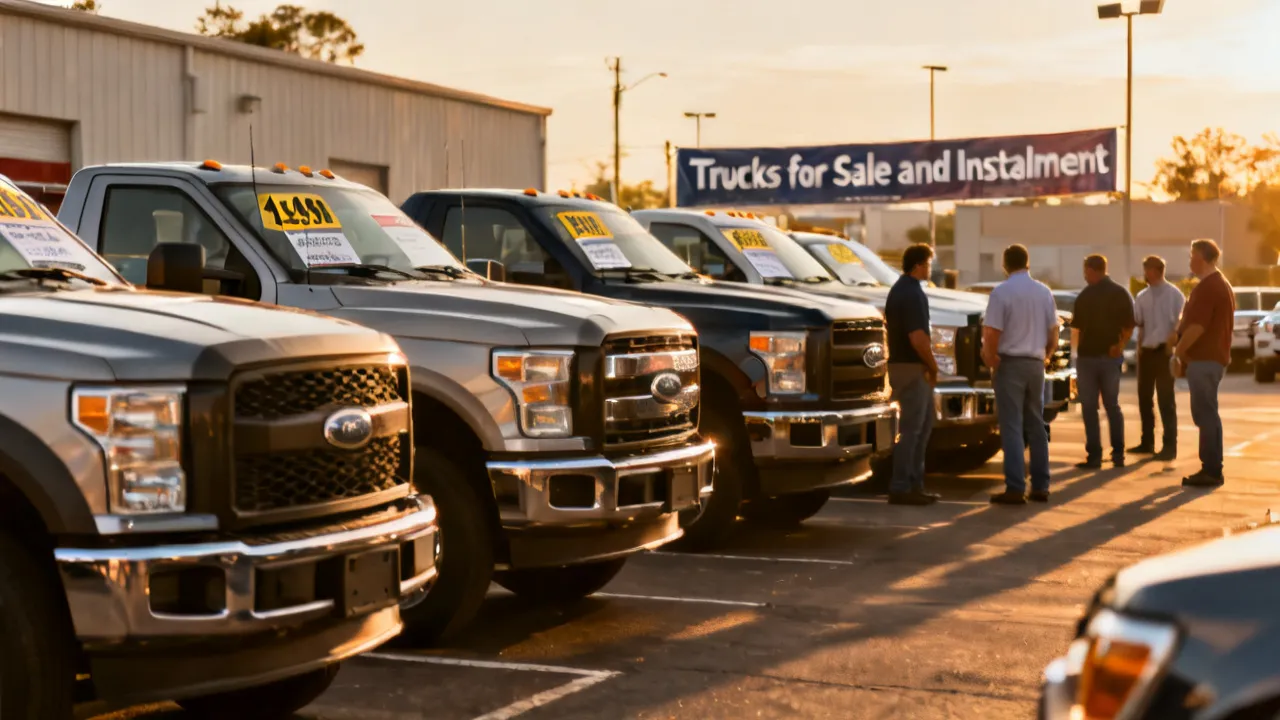
If you’re searching for Trucks for Sale and Instalment, the very important step is separating what looks affordable at first glance from what is genuinely affordable over the full term. An instalment plan can reduce upfront pressure, but your total cost of ownership still depends on interest rates, loan duration, fees, mileage/usage assumptions, and maintenance needs. From an industry perspective, buyers who do well typically treat financing as part of the total buying strategy—not an afterthought.
Because truck purchasing often involves work-readiness (payload, towing, reliability expectations, and downtime risk), “deal value” is not only the advertised price. It’s also whether the truck’s condition, history, and serviceability match your use case—whether that’s deliveries, fleet support, or small-business logistics.
In other words, you’re not only buying a vehicle—you’re buying a predictable working tool. For that reason, the best way to “buy with confidence” is to create a plan that covers: (1) what you truly need from the truck, (2) what it will likely cost to operate, (3) what finance will cost overall, and (4) what risk you can tolerate if the vehicle needs repairs or service sooner than expected.
Many buyers skip part of that process. They may focus heavily on the monthly payment (because it fits inside their budget) and then get surprised later by higher insurance premiums, fuel consumption, unexpected maintenance, or delays caused by mechanical issues. Confidence comes from anticipating those realities before signing anything.
To build that confidence, think about the timeline. You’re making a decision today, but you will be “paying” for it for months or years. So, when you evaluate an instalment offer, you need to ask: “What happens if the truck needs tires sooner than expected? What if the transmission starts showing signs of wear early? What if my route changes and my annual mileage is higher?” A good buying plan accounts for those “what ifs” rather than ignoring them.
Instalment purchasing usually offers lower initial payments than paying cash. That can be beneficial when you need to preserve working capital for fuel, insurance, licensing, or equipment. However, many buyers misunderstand two practical factors:
For trucks—vehicles that face higher wear depending on route and load—buyers should also consider how financing interacts with future maintenance. A vehicle that’s technically “within budget” on instalments can become expensive if it requires immediate repairs after purchase.
There is a second misconception too: “If the dealer offers instalments, it must be a fair price.” Not necessarily. Finance availability often reflects marketing and lender partnerships, but pricing might still be high if the truck’s condition is questionable or the dealer’s fees are significant. Instalments can make the monthly payment feel comfortable, while other costs remain hidden until later.
To avoid that problem, always separate the deal into components:
Then assess what happens if circumstances change. If your income fluctuates (common in many trucking and delivery businesses), the instalment plan should not rely on optimistic assumptions. If your income is seasonal, you should structure payments so that the business can survive slower months.
Finally, recognize that trucks often experience “cost spikes.” Even when repairs are manageable, tires, brakes, suspension components, filters, and engine maintenance can land together. Planning for instalments while ignoring operating costs can produce a cash-flow problem. The best buyers treat instalments as one part of a total cash-flow plan rather than a standalone solution.
To compare inventories efficiently, start with established online marketplaces and official dealer networks. In practice, these sites often centralize truck listings and may include financing-related information (such as payment estimates, lender offers, or links to finance applications). Using multiple sources helps you cross-check pricing and identify consistent vehicles across listings.
Below is a concise comparison of official car-trading websites that publish vehicle listings relevant to your search (including cars and truck listings depending on region and inventory availability).
| Website | What You’ll Typically Find |
|---|---|
| cars.com | Large marketplace of vehicle listings and dealer inventories; often includes financing pathways and payment tools depending on the listing. |
| carmax.com | Dealer-style listings with structured inventory browsing; frequently provides vehicle details and purchase/finance guidance. |
| caronsale.com | Vehicle listings across categories; can be useful for comparing offers and identifying candidates for deeper verification. |
| autotrader.com | Market listings that support searching across makes/models and often provide links for purchase and financing steps. |
source: www.cars.com, www.carmax.com/cars, www.caronsale.com, www.autotrader.com (Source of information for the referenced official websites)
When you search these marketplaces, you can often increase your efficiency by building a repeatable process. For example:
Also, don’t ignore official dealer websites. Many dealers list their stock both on marketplaces and on their own pages. The same truck can sometimes have slightly different pricing or fees depending on the channel, so cross-checking helps.
If you plan to buy through financing, it’s smart to keep a margin. Market prices can shift, and the final financing offer may depend on documentation and lender approval. When you keep a “max monthly payment” and “max total budget” in mind, you are less likely to accept a confusing or unfavourable quote during the excitement of negotiation.
Many buyers interpret “cheap” as the lowest sticker price. In the truck market, a “cheap” purchase usually means good value after verification. Use the workflow below to find trucks for sale—and to locate offers that are genuinely worth considering.
Write down your non-negotiables. For example: payload class, towing capability, drivetrain configuration, cargo configuration, and expected annual mileage. A mismatch here can lead to overspending later—either through repairs or because the truck simply doesn’t fit the job.
It helps to translate your business needs into measurable requirements. Instead of “I need something strong,” specify things like:
Then add a “nice to have” list. Nice-to-haves might include upgraded suspension, certain safety features, or a specific infotainment setup. This helps you avoid paying extra for features that don’t improve performance for your work.
Finally, consider the cost of downtime. A truck that is “cheap” but unreliable can cost more than the savings if it breaks during a busy period. When you define requirements, think not only about performance but also about reliability signals you’ll be able to verify during inspection.
When browsing inventories on major car-trading sites, prioritize:
Beyond those basic filters, consider narrowing your search by:
If you’re open to older models, broaden your search range—but tighten verification. Older trucks can be inexpensive, but the key is ensuring that wear items were maintained and replaced at the right times.
A listing that says “on sale” can mean different things: price reductions, limited-time promos, or dealer incentives. Do not assume every sale is equal. Instead, compare:
To make “sale” comparisons more accurate, check at least three items:
If you can, request the dealer’s written offer or an itemized estimate. When the dealer can clearly explain how the sale price becomes your final number, you have more confidence that you’re not being misled.
For trucks, condition verification is where value is confirmed. Request or review any available vehicle history documentation, inspection reports, and maintenance records. If the listing lacks details, consider it a red flag and do the work to fill gaps before negotiating.
Verification also includes understanding how the truck was likely used. Was it a city delivery truck with frequent stop-and-go use, or was it a highway vehicle? Usage patterns affect wear points:
During inspection, pay attention to common truck “wear indicators” such as:
If possible, arrange a pre-purchase inspection with a qualified mechanic. The cost of that inspection is often small compared to the savings you can lose if the truck has hidden problems.
When you reach the financing stage, don’t compare only the monthly instalment. Compare the:
From an industry angle, the very “budget-friendly” truck is often the one that survives real-world usage costs, not only the one with the smallest first payment.
A useful method is to compute an “all-in monthly cost” estimate. Include:
This approach can help you compare two trucks where one has a lower price but higher operating costs. For example, a truck with slightly higher fuel consumption might cost less upfront, but over a two-year period the fuel difference could erase the savings.
Also check whether the lender allows early repayment or refinancing. Some loans have prepayment penalties or restrictions. If your business grows quickly, you may want flexibility to pay down the loan earlier or restructure terms.
Use specific points: comparable listings, repair needs, missing service items, and market pricing variations. If you can show comparable vehicles with similar specs at better prices, negotiation becomes grounded rather than emotional.
Negotiation is easier when you can demonstrate that your offer is rational. Bring:
It’s also important to be careful with “pressure” tactics. Dealers sometimes use time-limited offers to push you to decide quickly. Before you agree, verify the final numbers and ensure the instalment plan matches what you discussed. If the dealer’s final offer differs, ask for clarification and request a revised written quote.
Although the exact requirements vary by lender and region, very approvals depend on similar fundamentals. Below is a practical comparison of what typically influences instalment eligibility and offer quality.
| Requirement/Condition | Why It Matters for Instalment Offers |
|---|---|
| Credit and credit history | Impacts interest rates and whether you qualify for the desired term. |
| Income and debt-to-income ratio | Determines monthly affordability and approval capacity. |
| Down payment | Reduces financed amount; may improve approval odds and payment size. |
| Vehicle value and condition | Lenders consider resale value and risk—especially important for trucks. |
| Loan term and total repayment | Longer terms can lower payments but may raise total interest cost. |
To further understand these requirements, it helps to think like the lender. The lender is primarily assessing two risks:
Trucks can be more complex than passenger cars for the asset-risk part because usage patterns, serviceability, and resale value vary. A well-maintained truck with clear history can often be easier to finance than one with uncertain maintenance or heavy damage.
For buyers, practical next steps include:
Even if your credit isn’t perfect, you may still qualify for instalment plans with different terms. Sometimes adjusting the down payment, choosing a different truck model/year, or reducing the requested term length can improve the offer quality.
Finally, ensure you understand any paperwork details about insurance requirements. Many lenders require full coverage insurance for financed vehicles. Failing to maintain required coverage can lead to complications or force-placed insurance, which can cost more.
As an industry-focused buyer’s guide, here are the recurring issues that separate “good deals” from “expensive lessons.”
To expand this checklist into a more operational “buying workflow,” consider the following deeper checks that directly relate to truck work.
A) Mechanical and driving checks
B) Load-and-use assumptions
C) Undercarriage and safety checks
D) Business continuity checks
On-sale inventory can be attractive—but only if it’s not priced low due to undisclosed issues. Use these objective evaluation habits:
To add more robustness, use a “reason for sale” question set. When you contact a seller, ask questions like:
Also pay attention to how the seller responds. A transparent seller will provide documentation, explain differences in price, and answer questions without hesitation. A vague response is often a sign you should slow down.
When a truck is genuinely a good deal, you can often find evidence: service records, consistent condition details, clear ownership history, and reasonable pricing compared with comparable units. When the deal is “too good,” the evidence usually points to missing information or repair requirements.
Choosing instalment terms is essentially a risk-management decision. A sound approach is to match your payment schedule to your income stability while protecting against repair surprises.
The key idea is that financing should support your operations, not create stress. Many truck buyers fail here because they treat financing like a one-time negotiation rather than a long-term structure. The best instalment structure is one that keeps you solvent during normal operations and during periods when maintenance is due.
If cash flow allows, a shorter instalment term can reduce total interest costs and potentially shorten the period of market risk.
Shorter terms often have additional benefits: you build equity faster, and you reduce the time your business depends on one vehicle’s condition. However, the monthly payment might be higher, so you need to confirm that essential operating costs still fit comfortably.
This can be practical when you need affordability in the near term. But ensure the truck condition doesn’t create “maintenance cliffs” during later loan years.
Longer terms reduce immediate pressure but can increase total interest cost. They can also keep you paying while the truck’s most expensive wear items may arrive. When choosing longer terms, consider whether the truck’s maintenance history suggests it’s likely to remain reliable throughout the extended period.
A common mistake is to extend the term without checking maintenance schedules. For trucks, items like tires, brakes, suspension components, and sometimes expensive driveline parts can become due at different times. If those repairs appear late in the loan, your cash flow might already be stretched by instalments.
A higher down payment can improve your effective affordability and may strengthen your financing application, depending on lender policies.
A larger down payment reduces the financed amount, which typically reduces interest cost and can also help you get better loan terms. But you also need to consider opportunity cost. If paying a larger down payment significantly reduces your cash reserve, you might struggle when repairs are required. So it’s smart to strike a balance between reducing loan risk and maintaining liquidity for maintenance and emergencies.
In practice, many buyers choose a down payment that keeps monthly instalments comfortable while still leaving a maintenance buffer. This is especially important for small businesses that cannot easily absorb downtime.
Very dealerships and finance partners can offer instalment options on many listings, but availability depends on credit criteria, vehicle condition/value, and lender policies. Always confirm the specific terms for the truck you’re considering, rather than assuming the category “Trucks for Sale and Instalment” applies universally.
Also, availability can differ between region, dealer type, and vehicle year/mileage. Some lenders have stricter maximum age and mileage requirements for financed trucks. If a listing seems “instalment-ready” but you cannot get approval, it might be due to these hidden constraints.
Evaluate the truck in terms of total value: verified condition, documented maintenance, realistic operating costs, and financing terms. A low sale price can still be a poor deal if the truck needs expensive repairs soon or if instalment terms significantly increase total cost.
A “smart cheap” truck is often cheaper because it’s priced fairly for its condition—not because it has hidden damage or because financing makes it expensive later. Look for evidence: maintenance records, inspection results, and consistent vehicle history. If the seller cannot provide evidence, the savings may be illusory.
Focus on mileage, engine/drivetrain details, equipment, and any disclosed inspection or history information. If details are missing or unclear, ask questions or arrange an inspection before you proceed.
In addition, verify that the truck matches your operational requirements. Many buyers apply for financing based on price alone, but if the drivetrain or bed configuration is wrong, you may end up paying for something that cannot perform your job. An instalment plan cannot fix a mismatch in specs.
No. Monthly instalments are only one component. Compare total repayment, interest rate, down payment requirements, and fees. For trucks, also factor in insurance and expected maintenance.
For a practical test, take your expected monthly instalment and add realistic insurance and maintenance costs. If the combined number leaves little margin for fuel or unexpected repairs, the truck may be “affordable” on paper but risky in real life.
Yes—major car-trading websites often host dealer inventory and may show promotional pricing depending on region and listing updates. Cross-check offers across multiple sources to confirm competitiveness and avoid misunderstandings.
Remember that “on sale” pricing can sometimes include conditions like qualifying for a particular finance rate or making a specific down payment. Before treating the listed sale price as final, confirm any prerequisites tied to financing or promotion eligibility.
Start with established online car-trading websites such as cars.com, carmax.com, caronsale.com, and autotrader.com. These sites can help you browse inventories and then you can verify each candidate truck more thoroughly through inspection and dealer documentation.
As you research, keep your notes organized. A structured approach is one of the simplest ways to avoid buyer’s remorse. You can compare different trucks quickly, spot price anomalies, and focus on units that actually align with your needs.
Disclaimer: The above information comes from online resources, and the data is as of October 2023. For more information, please refer to the official website(s) listed in this guide.
Reference links: https://www.cars.com/, https://www.carmax.com/cars, https://www.caronsale.com/en, https://www.autotrader.com/
How Progressivecommercial.com Supports Smarter Commercial Buying
Progressivecommercial.com Guide for Buyers and Suppliers

A Practical Guide to Progressivecommercial.com Sourcing

Progressivecommercial.com Sourcing Guide for Buyers

Building Reliable Procurement with Progressivecommercial.com

How Progressivecommercial.com Supports Smart Commercial Buying

How ProgressiveCommercial.com Supports Smarter Business Sourcing

How Progressivecommercial.com Shapes Modern Procurement
How Progressivecommercial.com Supports Smarter Commercial Procurement

Trucks for Sale and Instalment: Buy Smart
Trucks for sale and instalment plans can help many buyers move from browsing to owning a vehicle without stretching cash flow. This guide explains how to evaluate truck inventory, understand financing terms, and compare reputable dealers, while keeping expectations realistic. It also reviews official car-trading websites where trucks and financing options are often listed, providing an objective background for informed decisions.

Trucks for Sale and Installment Buying Guide
Trucks for Sale and Instalment programs can make upgrading practical by spreading payments over time. This guide explains how installment deals work, what to check before signing, and how to compare listings from major official car trading platforms. It also offers an objective decision framework for finding a reliable truck at a fair total cost, including common documentation and eligibility needs.
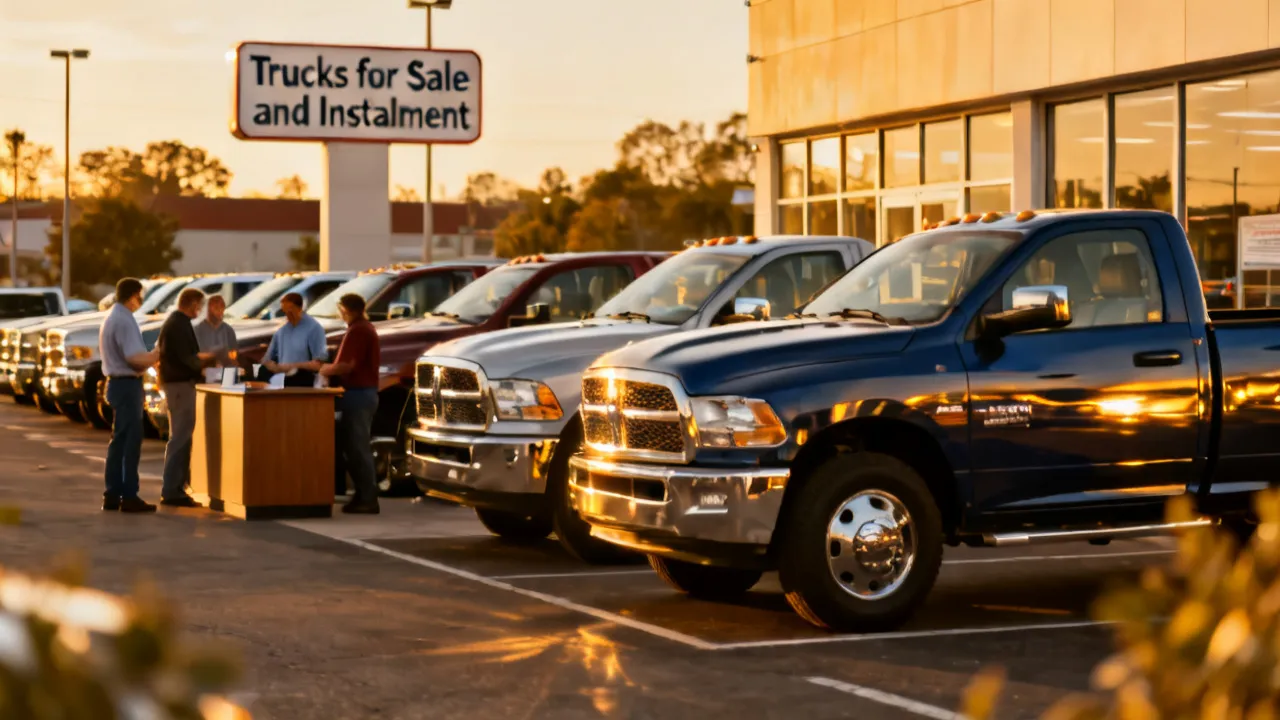
Trucks for Sale and Instalment: Smart Buying Guide
Trucks for sale and instalment deals require more than choosing a model—buyers must understand total cost, credit fit, and the paperwork that makes monthly payments reliable. This guide offers an objective overview of how instalment plans typically work and how to compare options across major official car trading platforms. It also outlines practical steps for finding a good-value truck while managing risk.
Buying Trucks for Sale and Instalment Responsibly
This guide explains how to buy trucks for sale with instalment options while keeping choices practical and compliant. You’ll learn what to check before financing, how to compare offers across reputable marketplaces, and how to spot reliable deals. It also outlines a step-by-step approach to estimating monthly affordability, verifying vehicle history, and choosing terms from trusted official car trading websites—using objective guidance rather than hype.
How to Buy Trucks for Sale with Instalments
This guide explains how to find and buy trucks for sale with instalment options, focusing on practical selection, financing readiness, and cost control. “Trucks for Sale and Instalment” reflects a common pathway for commercial buyers who want access to reliable transport without paying the full amount upfront. Background context covers how online marketplaces, dealer inventories, and credit qualification typically shape availability and total ownership cost.
Trucks for Sale with Installment Options
This guide explains how to find trucks for sale and instalment plans, compare reputable listings, and estimate total costs before committing. It begins with objective background on keyword concepts—dealer inventories, financing structures, and eligibility factors—then moves to practical steps for spotting dependable offers, narrowing choices, and completing paperwork with confidence using established car trading platforms.
