This guide explains the BMW 2050 Meme, its visual language, cultural context, and relationship to real automotive design trends. The meme is an internet-based thought experiment rather than an official BMW forecast, often portraying exaggerated futuristic vehicles with unusual proportions, digital interfaces, and speculative technology. The article also compares major car-shopping platforms and outlines practical steps for finding and purchasing an affordable vehicle.
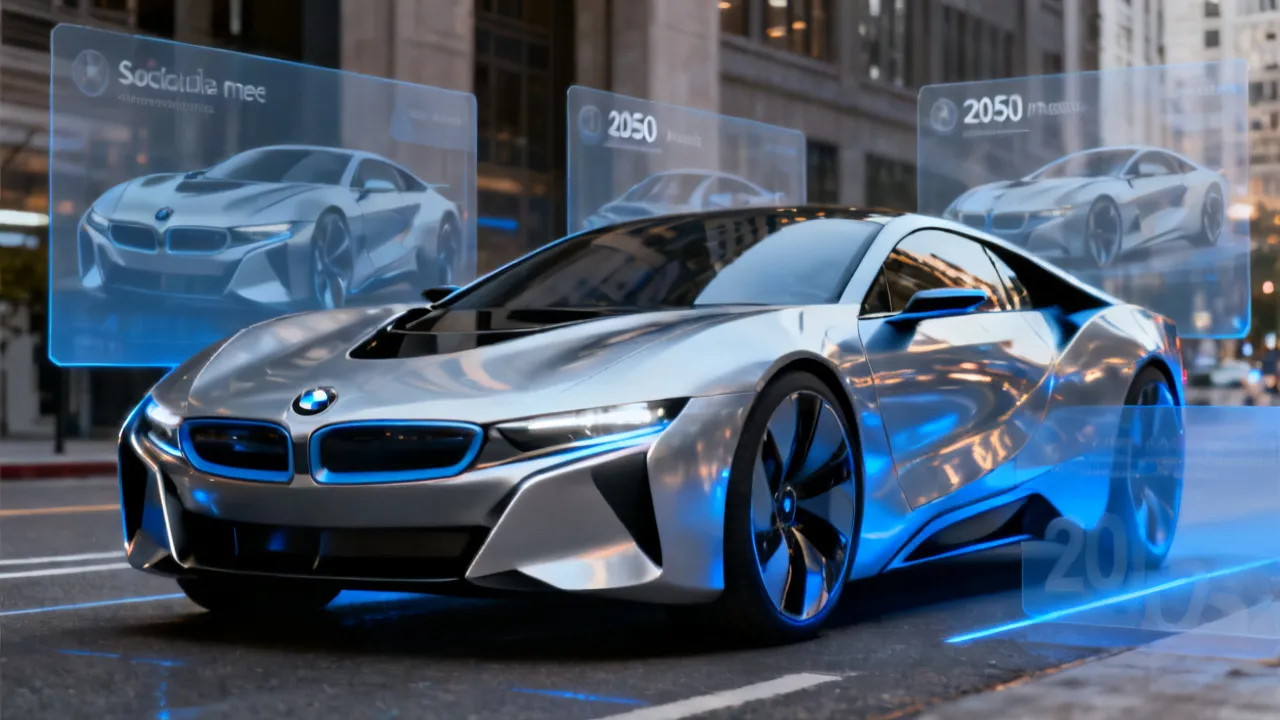
The BMW 2050 Meme is best understood as a visual joke and speculative design format rather than a confirmed product announcement. It commonly presents an imagined BMW from the distant future, combining recognizable brand cues with exaggerated ideas about autonomous driving, electric propulsion, artificial intelligence, immersive displays, and unconventional body shapes. The humor usually comes from the contrast between a familiar present-day vehicle and an intentionally extreme interpretation of what a car might look like decades from now.
Images associated with the meme may show a vehicle with a highly enclosed cabin, oversized wheels, sharply folded bodywork, narrow lighting elements, or an interior that appears more like a digital lounge than a conventional cockpit. Some versions are polished concept-art images, while others deliberately use awkward proportions, synthetic rendering, or satirical captions. The central appeal is not technical accuracy. It is the meme’s ability to turn broad public assumptions about future technology into a recognizable visual punchline.
From an industry perspective, the meme also reflects a genuine tension in automotive design. Manufacturers are exploring electrification, software-defined vehicles, advanced driver-assistance systems, connected services, and new ownership models. However, the path from a design sketch to a production vehicle is controlled by safety rules, manufacturing costs, charging infrastructure, customer expectations, and legal requirements. The exaggerated BMW 2050 Meme removes many of those constraints so that the audience can focus on the imagined future.
Readers should therefore separate three different categories of information:
Confusing these categories can lead to inaccurate claims about BMW products, future regulations, or vehicle availability. A meme may resemble a professional rendering, but appearance alone does not establish that BMW designed, approved, or plans to sell the vehicle shown.
Automobiles occupy an unusual place in popular culture. They are transportation tools, consumer products, status symbols, engineering achievements, and design objects at the same time. A meme about a future car can therefore communicate several ideas in one image. It can joke about expensive technology, question whether vehicles are becoming too dependent on software, celebrate futuristic styling, or criticize designs that appear detached from practical driving.
The BMW name is especially effective in this format because the brand has a strong visual identity and a large global audience. BMW vehicles are often associated with performance, premium materials, driver-focused engineering, and recognizable design details. When a meme transforms those characteristics into a radical future form, viewers can understand the reference immediately, even if the image is fictional.
Online audiences also respond to the contrast between brand heritage and imagined disruption. A classic BMW silhouette communicates continuity, while a sealed electric pod or autonomous lounge communicates change. The meme creates humor by placing these ideas together. It asks, implicitly: if automotive technology continues to advance, which elements of today’s car will remain recognizable?
Another factor is the popularity of generative digital imagery. Contemporary concept illustrations can be produced and shared quickly, often without the production process associated with an official auto show. This makes it easier for creators to combine real brand identifiers with speculative details. As a result, viewers should inspect captions, account descriptions, image credits, and publication context before treating a futuristic car image as an official announcement.
Although there is no single official template, several visual features appear repeatedly in BMW 2050 Meme content. These features are not predictions; they are recurring artistic devices.
| Visual element | Typical interpretation | Practical industry context |
|---|---|---|
| Highly enclosed cabin | Suggests autonomous travel or a private digital space | Real vehicles still require careful attention to visibility, occupant protection, emergency access, and regulatory compliance |
| Minimal controls | Suggests voice interfaces, gesture controls, or automated driving | Production vehicles must consider driver workload, reliability, accessibility, and safe fallback systems |
| Oversized wheels and narrow glass | Creates a dramatic, futuristic silhouette | Wheel size, tire design, structural strength, ride comfort, and visibility impose practical limits |
| Continuous lighting strips | Signals a high-tech identity and connected vehicle behavior | Exterior lighting is subject to road-traffic rules and must remain visible in varied conditions |
| Unusual seating arrangements | Suggests a mobile office, lounge, or entertainment room | Seat placement must account for crash protection, restraint systems, ergonomics, and access |
| Hidden or animated body panels | Suggests that the vehicle can physically change according to its mode or environment | Moving exterior components add weight, cost, maintenance requirements, and potential failure points |
| Floating dashboard displays | Represents augmented reality, personalized information, or a screen-centered interior | Actual displays must remain readable, intuitive, durable, and minimally distracting while driving |
These visual conventions work because they are easy to recognize. A viewer does not need to understand battery chemistry or software architecture to identify the intended joke. The image communicates “future car” through a small set of design signals.
The meme also often exaggerates scale. Wheels may be drawn much larger than necessary, windows may be reduced to thin strips, and the front of the car may be almost entirely smooth. These choices make the vehicle appear more advanced in a single glance. In a real design studio, engineers would need to assess suspension travel, tire availability, turning radius, pedestrian protection, airflow, structural load paths, and service access before approving such features.
A useful way to analyze the BMW 2050 Meme is to divide its features into plausible direction, uncertain possibility, and artistic exaggeration.
Electric propulsion is a credible element in many future-car discussions. Battery-electric vehicles already exist across multiple market segments, and manufacturers continue to invest in battery development, charging systems, energy management, and vehicle software. However, the existence of electric vehicles today does not prove that every future BMW will use a particular battery chemistry, charging speed, range figure, or body design.
Electric propulsion can also influence design because an electric powertrain does not need the same arrangement of engine, transmission, exhaust, fuel tank, and cooling hardware as a conventional combustion vehicle. Designers may gain more freedom with floor height, cabin placement, storage areas, and front-end proportions. That freedom is real, but it is not unlimited. Batteries remain heavy, crash protection remains essential, and the passenger compartment must still accommodate people, luggage, climate-control equipment, wiring, and safety systems.
Modern vehicles increasingly rely on software for infotainment, driver assistance, diagnostics, charging management, and personalization. A future vehicle may therefore receive more functionality through software updates or connected services. Yet software does not eliminate the need for hardware reliability. Sensors, brakes, steering systems, power electronics, and structural components remain subject to demanding engineering and regulatory requirements.
More software may also introduce questions about ownership. Some manufacturers have experimented with feature activation, digital subscriptions, remote services, and paid upgrades. Whether consumers accept these arrangements will depend on price, transparency, network access, and the value of the functions offered. A meme may portray every capability as instantly available through artificial intelligence, while an actual owner may need a compatible device, a current subscription, a reliable connection, and a software version supported by the manufacturer.
Automation is one of the most common themes in futuristic car imagery. The concept is technically significant, but real-world implementation depends on the operating environment, weather, road quality, mapping, sensor performance, cybersecurity, driver responsibility, and local law. A design that appears fully autonomous in a meme should not be interpreted as evidence that a particular manufacturer has solved every challenge.
There is also an important difference between driver assistance and full automation. A system may help maintain speed, braking, lane position, or distance while still requiring the driver to supervise the road. Another system may operate only on certain roads or under specific conditions. A fully automated vehicle would need to manage situations that humans often handle intuitively, including road construction, emergency vehicles, unusual obstacles, unclear lane markings, and unpredictable behavior from other road users.
Extremely low rooflines, tiny windows, enormous wheels, and nearly invisible controls may look compelling in a digital illustration. Production vehicles must accommodate people of different sizes, luggage, child restraints, emergency responders, manufacturing tolerances, and maintenance procedures. The more extreme the proportions, the more likely the design is functioning as visual satire rather than a production proposal.
Designers also have to consider visibility and comfort. A narrow windshield may create a dramatic profile, but it can limit the driver’s view. A sharply sloping roof may reduce headroom and cargo space. Huge wheels can increase tire and replacement costs while transmitting more road impact into the cabin. These compromises may be acceptable in a one-off show car, but they are more difficult to justify in a vehicle intended for thousands of customers.
Industry analysts typically begin with provenance. The first question is not whether the image looks realistic, but where it came from. An official manufacturer website, a recognized auto show announcement, or a verified corporate communication carries a different evidentiary value from an anonymous social media post.
This method is valuable beyond the BMW 2050 Meme. Online automotive content often blends journalism, advertising, enthusiast commentary, digital art, and humor. A disciplined reader can enjoy the creative material without mistaking it for a purchasing recommendation.
Language is especially important. A headline that says “BMW unveils” makes a stronger claim than one that says “artist imagines.” Similarly, “future BMW concept” may refer to an official concept vehicle, while “BMW 2050 Meme” may simply describe a community-created joke. Readers should identify the subject, source, date, and intended audience before drawing conclusions.
Memes simplify complex subjects. The automotive industry involves engineering, finance, regulation, logistics, environmental policy, and consumer behavior. A short caption and a striking image can bring these topics into a casual conversation. The BMW 2050 Meme may encourage viewers to discuss whether future cars will remain driver-oriented, whether screens are becoming too dominant, or whether premium vehicles are moving toward subscription-based features.
That influence has both strengths and limitations. A meme can make technical questions approachable, but it can also compress nuance into a misleading impression. For example, an image of a completely autonomous vehicle might encourage the belief that automation is inevitable and uniform across all roads. In reality, different systems operate at different levels of assistance, and legal responsibility may vary by jurisdiction.
Memes can also shape expectations about design. If audiences repeatedly see vehicles with narrow lights, smooth surfaces, and hidden door handles, those features may become associated with technological advancement. Designers are aware of this cultural feedback. They may use familiar signals to communicate innovation, even when the underlying technology is less dramatic than the visual language suggests.
The meme format also gives consumers a way to express skepticism. A viewer may laugh at an interior filled with screens because it reflects concern that cars are becoming distracting or unnecessarily complicated. Another viewer may interpret the same image as an exciting vision of comfort and convenience. The image is therefore open to multiple readings, depending on whether the audience values control, performance, privacy, efficiency, entertainment, or simplicity.
The meme’s effectiveness depends partly on BMW’s long design history. The brand has produced vehicles with recognizable proportions, signature grilles, distinctive lighting, and a strong emphasis on driving character. Concept vehicles have often been used by automakers to explore new proportions, materials, interfaces, and powertrains before those ideas reach a showroom.
However, a concept vehicle is not automatically a preview of a future production model. Concept cars may be created to test public reaction, demonstrate design capability, support an auto show theme, or communicate a technological direction. They can include features that are too costly, difficult to certify, or impractical for mass production.
The BMW 2050 Meme takes this established concept-car tradition and moves it into a humorous online setting. It treats the future car as a cultural object rather than a product announcement. In that sense, the meme is less about predicting one exact BMW and more about exploring how people imagine technological change.
Brand heritage also gives the meme an emotional dimension. A future image may retain a familiar grille shape, a recognizable badge location, or a particular stance even when nearly every practical feature has changed. This suggests that vehicle identity is not determined by one component alone. It is built from proportions, graphics, sounds, materials, interface behavior, and the expectations associated with the brand.
The date in the BMW 2050 Meme is important because it is distant enough to permit imaginative freedom. A vehicle said to arrive next year can be judged against current engineering and business conditions. A vehicle placed several decades in the future is harder to verify, so creators can introduce more radical ideas without immediate scrutiny.
A distant date also suggests broad social change. The imagined car may reflect assumptions about urban planning, energy systems, employment, mobility services, climate policy, and personal ownership. Whether those assumptions are correct is uncertain. The date operates primarily as a storytelling device that signals “far future.”
Readers should not interpret the date as a confirmed development schedule. Unless a manufacturer has published a formal program, the number is part of the meme’s framing, not a commercial commitment.
Long time horizons can also hide the difference between technical possibility and commercial probability. A feature might be physically possible by 2050 but still unlikely to appear in an ordinary consumer vehicle because of cost, regulation, maintenance, cultural resistance, or limited demand. Conversely, an important change may arrive in a less dramatic form than meme creators expect. Wireless updates, improved batteries, better recycling, and more efficient manufacturing could have a greater effect than a vehicle that transforms into a living room.
People who encounter futuristic vehicle content may become curious about real cars with similar characteristics. Current buyers can look for electric vehicles, hybrid models, advanced driver-assistance features, digital dashboards, efficient lighting, or distinctive aerodynamic styling. The practical task is to distinguish a vehicle’s verified equipment from the visual promise of a concept image.
When researching a vehicle, focus on the information that affects ownership:
These factors matter more than whether a vehicle resembles an online rendering. A highly styled car may be enjoyable to own, but affordability and reliability depend on the full ownership picture.
Technology should also be evaluated by usefulness rather than novelty. A high-resolution display may be attractive, but buyers should check whether common controls are easy to use while driving. A driver-assistance package may reduce fatigue, but it should not be treated as a substitute for attentive driving. A connected application may be convenient, yet its usefulness can depend on cellular coverage, account access, software support, and privacy policies.
Several established platforms can help shoppers compare vehicles. Their business models and inventory structures differ, so a buyer should understand what each website actually provides. Listings, prices, availability, fees, and vehicle condition can change. The platforms should be treated as research and transaction resources, not as substitutes for an independent inspection or a careful review of sale documents.
| Platform | Primary use | Important buyer consideration |
|---|---|---|
| Cars.com | Search and comparison of dealer and private-party vehicle listings, depending on market and listing type | Review seller details, vehicle history information, displayed fees, location, and listing date before contacting the seller |
| CarMax | Browse inventory from a large used-vehicle retailer and review vehicle-specific information online | Confirm transfer policies, return terms, warranty coverage, taxes, and final pricing before completing a purchase |
| CarOnSale and AutoTrader | Research vehicles and connect with automotive sellers through online marketplace tools | Determine whether the listing is direct, dealer-based, or part of another sales arrangement, and verify all transaction terms |
source: www.cars.com
source: www.carmax.com/cars
source: www.caronsale.com/en
source: www.autotrader.com
Search tools are most useful when the shopper creates a consistent comparison method. Record the stock number or listing identifier, VIN when available, mileage, asking price, location, seller type, included equipment, and advertised warranty. Online listings may be updated at different times, so preserving screenshots or written notes can help when asking a seller about a price or a missing feature.
Finding an affordable vehicle requires more than sorting listings from the lowest advertised price upward. The least expensive listing may carry higher insurance, maintenance, financing, or repair costs. A sound search begins with the total budget and ends with a documented inspection.
Set a maximum purchase amount, but also estimate recurring expenses. These may include fuel or electricity, insurance, registration, routine servicing, tires, parking, and possible repairs. For a used vehicle, keep a reserve for maintenance after purchase. A car that fits the advertised price may not fit the household budget once these costs are included.
Financing requires particular care. Compare the annual percentage rate, loan duration, total interest, down payment, and any lender fees. A longer loan can reduce the monthly payment while increasing the total amount paid. Buyers should review the written contract rather than relying only on an online payment calculator.
Identify the normal driving pattern. A commuter who travels short distances may prioritize reliability, compact dimensions, and efficient operation. A family may need rear-seat space, child-seat compatibility, and cargo capacity. Someone in an area with severe winter weather may place greater importance on tire availability, ground clearance, traction systems, and cold-weather service.
Avoid paying for features that do not serve the intended use. Conversely, do not dismiss safety equipment or maintenance history merely because a vehicle has attractive styling. The best-value purchase is generally the one that meets the real transportation requirement with manageable ownership risk.
Use multiple sources rather than depending on a single listing database. Cars.com can support broad comparison across available listings. CarMax can be useful for shoppers reviewing inventory from a large used-vehicle retailer. CarOnSale and AutoTrader can provide additional marketplace exposure, depending on the buyer’s location and the type of vehicle sought.
When comparing listings, record the mileage, model year, trim, drivetrain, location, seller type, advertised price, and included equipment. This prevents a low price from appearing attractive only because a listing omits a feature or carries unusually high mileage.
Use filters for mileage, title status, accident history where available, service records, and seller reputation. A clean-looking image does not demonstrate mechanical condition. Ask whether the vehicle has been used for commercial service, rental operations, severe-weather driving, or towing. The seller may not have every answer, but the questions help reveal the quality of the available documentation.
Condition includes more than the engine and transmission. Check the age of the tires, remaining brake material, windshield condition, suspension wear, air-conditioning performance, interior damage, and operation of electronic equipment. Small defects may be inexpensive, but several unresolved defects can materially change the purchase calculation.
The vehicle identification number, commonly called the VIN, should match the listing, the windshield or door-jamb label, the title documents, and the vehicle-history report. A mismatch is a serious warning sign. Buyers should also check for open safety recalls through an appropriate official or manufacturer-supported resource in their jurisdiction.
A history report is helpful but not complete. Not every accident, repair, flood event, or maintenance visit is recorded. The report should therefore be considered one part of the evaluation rather than a guarantee of condition. Compare it with service invoices, inspection findings, seller statements, and the physical vehicle.
An independent mechanic can assess the engine, transmission, suspension, brakes, tires, steering, electrical systems, underbody, and signs of collision repair. For an electric or hybrid vehicle, the inspection should include the high-voltage system where the technician is qualified to evaluate it. Battery condition is not always visible during a casual test drive.
Some online retailers offer their own inspection processes or limited return policies. Those provisions can be useful, but they should be read carefully. A buyer should confirm the duration, mileage limit, excluded components, transportation requirements, and whether inspection costs are reimbursed.
If a seller refuses an independent inspection, the buyer should understand that the refusal increases uncertainty. Even a vehicle that appears clean and drives well can have hidden damage, pending mechanical work, or a title problem. Walking away from an uncertain transaction is often less costly than attempting to repair a major defect after purchase.
Test the vehicle in conditions that reflect normal use. Start with a cold engine when possible, listen for unusual sounds, and observe warning lights. Evaluate acceleration, braking, steering response, ride quality, cabin noise, climate control, visibility, seat comfort, and technology functions. Test parking sensors and cameras without allowing them to replace careful observation.
For an electrified vehicle, review charging compatibility, estimated charging time, cable condition, battery display behavior, and access to suitable charging equipment. A vehicle may be technically capable of long-distance travel but inconvenient if charging access is limited in the owner’s routine.
Try the vehicle with the entire household if possible. A front-seat position that feels comfortable to the purchaser may leave insufficient room for rear passengers. Cargo space should be tested with actual items such as groceries, luggage, sports equipment, mobility aids, or child seats. Practical fit is difficult to judge from photographs alone.
Ask for an itemized buyer’s order. The document should distinguish the vehicle price from taxes, registration, documentation fees, financing charges, optional products, delivery expenses, and dealer accessories. Do not judge competing offers only by the monthly payment. Compare the total amount due and the total financing cost.
Be cautious about optional products that are presented as necessary. Extended service contracts, appearance packages, theft-deterrent products, wheel coverage, and prepaid maintenance plans may have value in some circumstances, but their price and exclusions should be clear. A buyer should never feel pressured to accept an unfamiliar product without time to review its written terms.
Review the title status, odometer statement, warranty documents, purchase agreement, financing contract, and return provisions. Make sure every promise made during negotiation appears in writing. Confirm how registration and plates will be handled, and retain copies of all records.
Payment and delivery procedures should also be verified. Confirm who holds the title, when funds are transferred, what documents are required, and whether transportation or delivery charges are refundable. Buyers should avoid sending money based solely on an email, text message, or social media conversation without confirming the seller and transaction through an established channel.
Many online listings are ordinary sales advertisements, but buyers should remain alert to inconsistent or incomplete information. A listing deserves additional scrutiny when the price is dramatically lower than comparable vehicles without a clear reason, the seller refuses a reasonable inspection, the VIN is unavailable, or the payment process is unusual.
Other warning signs include pressure to act immediately, requests for payment through methods that provide limited buyer protection, stock images instead of photographs of the actual vehicle, vague answers about title status, and a seller location that changes during the conversation. These signs do not prove wrongdoing by themselves, but they justify slowing down and verifying the transaction.
Professional marketplaces may provide tools such as seller profiles, vehicle histories, financing options, or standardized listing fields. These features can reduce uncertainty, but they do not eliminate it. Buyers remain responsible for confirming the vehicle’s condition, legal status, and final transaction terms.
A listing can also be misleading without being fraudulent. For example, a vehicle may be advertised at a low base price while excluding taxes, dealer fees, transportation charges, or required accessories. A photograph may show optional equipment not included in the advertised trim. The buyer should ask what exactly is included and request a written breakdown before comparing offers.
A product advertisement normally communicates a commercially available item, an identifiable seller, a price or pricing method, and legally relevant disclosures. A meme has a different purpose. It may have no seller, no production timeline, no technical specification, and no connection to the brand depicted.
This distinction is particularly important when a meme is reposted without its original caption. A humorous image can be stripped of context and presented as a “leaked” vehicle. The use of a familiar grille, emblem, or lighting signature can make the claim appear credible. Readers should not infer official involvement from branding alone.
From a communications standpoint, the safest description is usually precise: “an online speculative image associated with the BMW 2050 Meme.” This wording acknowledges the cultural reference without asserting that BMW produced the image or plans to manufacture the vehicle.
Readers should also remember that official concept imagery can be speculative in its own way. Even when an automaker publishes a concept, the vehicle may be intended to communicate an idea rather than promise a production model. The source determines whether an image is official, but the word “concept” still signals that the displayed features may not reach the showroom.
Despite its fictional character, the meme can prompt useful design analysis. First, it illustrates the power of continuity. Even a radically different vehicle often retains selected brand signals so that viewers can identify it. Second, it demonstrates that technology is communicated visually. Smooth surfaces, animated lighting, and large displays have become shorthand for digital sophistication.
Third, the meme raises questions about human interaction. If a vehicle becomes increasingly automated, what should the driver do? How should a passenger understand the system’s limitations? What happens if connectivity fails? These questions are more important than the appearance of a futuristic dashboard because they affect safety and trust.
Fourth, the meme highlights the difference between desirable innovation and visible innovation. Some of the most valuable automotive improvements may be hidden: better structural protection, more accurate diagnostics, quieter motors, improved thermal management, or stronger cybersecurity. Those advances may not create a dramatic image, but they can substantially affect the ownership experience.
Fifth, the image shows how designers use exaggeration to make a message legible. A small improvement in aerodynamic efficiency may be difficult to represent, so a concept artist may use a completely smooth body. Incremental software development may be represented by a vehicle that appears to think, communicate, and change shape. The visual language is metaphorical, and interpreting it as literal engineering documentation creates confusion.
Future-car discussions often focus on propulsion, but environmental performance depends on the full life cycle of a vehicle. Manufacturing materials, battery production, electricity generation, vehicle weight, maintenance, durability, and end-of-life processing all influence the broader impact. A futuristic appearance does not automatically indicate superior environmental performance.
Similarly, an electric powertrain does not make every use case identical. Charging access, climate, driving distance, towing requirements, and local electricity conditions influence suitability. A responsible buyer should compare verified specifications and personal needs rather than rely on broad claims about any powertrain.
Vehicle longevity is another important consideration. A car that remains reliable for many years may reduce the need for replacement, although maintenance and repair requirements still matter. Software support policies, battery warranties, and parts availability can become increasingly important as vehicles depend on digital systems.
Weight deserves attention as well. Large batteries can provide greater range, but they add mass, which can affect tire wear, braking demands, efficiency, and road impact. A smaller and lighter vehicle may serve some urban drivers better than a large vehicle with an impressive theoretical range. The most sustainable choice depends on actual use rather than futuristic branding.
Clear answers do not guarantee a perfect vehicle, but evasive answers increase the risk of an unfavorable purchase. The objective is to create a record that allows the buyer to compare alternatives rationally.
Not by default. The phrase generally refers to online humor, speculative artwork, or exaggerated future-car imagery. An image should be treated as unofficial unless it is supported by a verifiable BMW corporate communication or an established automotive publication citing an official source.
The meme’s title should not be interpreted as evidence of a confirmed production model. A production vehicle would normally have documented information about its model name, development status, market, specifications, and launch plans. Online images alone do not establish those facts.
Digital artists and image-generation tools can create polished automotive renderings with realistic lighting, materials, and studio backgrounds. Professional appearance indicates visual effort, not corporate approval or engineering feasibility.
Some themes, such as electric propulsion, connected software, advanced driver assistance, and redesigned interiors, are plausible areas of continued development. The exact combination, timing, and availability remain uncertain and depend on engineering, regulation, market demand, and business decisions.
Find the earliest available source, inspect the account or publication, look for labels such as concept art or fan art, and compare the claim with official BMW communications. Do not rely solely on reposts, captions, or image watermarks.
Usually not. The image generally depicts an imagined vehicle rather than a listing for a commercially available car. Buyers seeking a real vehicle should use established marketplaces, verify inventory, and confirm the seller’s documentation.
Cars.com, CarMax, CarOnSale, and AutoTrader are examples of online resources that can support vehicle research. Their inventory, services, seller relationships, fees, and availability differ. Review the listing carefully and confirm terms directly with the relevant seller.
A comprehensive review of the vehicle’s history, title, condition, and final purchase documents is essential. An independent inspection is also highly valuable, especially when the vehicle has substantial mileage, incomplete records, unusual modifications, or an unclear history.
Design can be an important preference, but it should be evaluated alongside safety, reliability, practicality, service access, insurance, financing, and total ownership cost. A dramatic appearance does not guarantee suitable performance or dependable ownership.
Artificial intelligence can generate images based on patterns found in existing visual material, but it cannot reliably predict future engineering decisions, regulations, consumer preferences, or business conditions. An AI-generated image is an imaginative output, not a forecast with official status.
The BMW 2050 Meme is useful as a cultural artifact because it reveals how people imagine the relationship between identity and technology. The vehicle remains recognizable as a BMW only if enough visual or symbolic continuity survives. At the same time, the exaggerated future form suggests that technology could change the role of the automobile from a machine controlled primarily by a driver into a connected service environment.
An automotive expert would advise readers to appreciate that tension while maintaining evidentiary discipline. Use the meme to ask questions about design, automation, energy, and mobility. Do not use it as a source for specifications, investment decisions, purchasing claims, or statements about BMW’s official roadmap. For real-world shopping, return to verified listings, inspection results, signed documents, and clearly stated warranty terms.
The same principle applies to vehicle marketplaces. Online tools make comparison easier, but convenience does not replace due diligence. A buyer who understands the difference between a listing, a dealer promise, an inspection report, and a legally binding contract is better positioned to make a sound decision. The imaginative world of the BMW 2050 Meme can inspire curiosity; the practical world of car ownership still depends on evidence.
There is also value in recognizing uncertainty. Automotive forecasts are often presented with confidence because confident predictions are more appealing to readers. Yet transportation systems change through many small decisions made by manufacturers, governments, infrastructure providers, software developers, insurers, and drivers. The vehicle of 2050 may not be defined by one spectacular invention. It may instead result from gradual changes in energy storage, materials, road networks, digital services, urban policies, and consumer habits.
The BMW 2050 Meme combines recognizable BMW design language with exaggerated ideas about the distant future. It is best read as satire, speculative design, or digital culture—not as a confirmed vehicle announcement. Its recurring themes, including electric propulsion, autonomous travel, software-heavy interiors, and unusual proportions, reflect real conversations in the automotive sector, but the meme does not verify the feasibility or availability of any particular feature.
For readers moving from online inspiration to an actual purchase, the process should be grounded in budget planning, marketplace comparison, VIN verification, vehicle-history research, independent inspection, and careful review of final pricing. Cars.com, CarMax, CarOnSale, and AutoTrader can serve as starting points for researching vehicles on sale, provided that buyers verify each listing and consult the relevant official terms.
The strongest way to engage with the meme is to enjoy its humor while asking practical questions. Which technologies already exist? Which features are still experimental? Which visual details are impossible or merely expensive? How might future vehicles balance automation with human control, digital convenience with privacy, and performance with environmental responsibility? Those questions transform a viral image into a useful starting point for understanding the automotive industry.
Disclaimer: The above information comes from online resources, and the data is as of October 2023. Vehicle listings, prices, policies, specifications, technology, laws, and availability may change. For current information, please refer to the relevant official website and verify details directly with the manufacturer, dealer, marketplace, regulator, lender, or qualified inspection professional.
Understanding Vehicle Availability for Better Purchasing Decisions

How Vehicle Availability Affects Used Car Deals

How to Secure Vehicle Availability Efficiently
How Vehicle Availability Shapes Smarter Fleet Decisions
Vehicle Availability Guide for Buying a Used Car

Vehicle Availability Guide for Buying a Car

Vehicle Availability Guide for Buying a Deal Car

Vehicle Availability Guide for Reliable Sourcing Decisions

Understanding Vehicle Availability for Smarter Buying Decisions

How Vehicle Availability Affects Used Car Deals
Vehicle availability is a major factor behind pricing, selection, and the speed of purchase when shopping for cars on sale. This guide explains how inventory flows, what to check before you commit, and how to locate affordable options using official trading platforms such as cars.com, CarMax, Caronsale, and Autotrader. It also provides a practical buying checklist and FAQs from an industry expert perspective.
Vehicle Availability Guide for Buying a Used Car
Vehicle Availability determines how quickly you can match your needs with cars on sale, from pricing and inventory to lead times. This guide explains, in an objective way, how to evaluate availability across major trading platforms, compare listings from official car trading websites, and use a step-by-step method to find a cheap car with confidence—while accounting for condition, location, and verification requirements.
Vehicle Availability Guide for Buying a Car
Vehicle Availability is the practical starting point for finding the right car in a market that changes daily. This guide explains how to evaluate inventory, pricing signals, and dealer listings without guesswork, using established official trading websites. You’ll learn how to locate offers, compare options, and decide efficiently—backed by clear conditions and expert buying considerations.
Vehicle Availability Guide for Buying a Deal Car
This guide explains how to assess Vehicle Availability before buying a car on sale, so you can avoid common surprises in stock, timing, and paperwork. It covers how to compare listings, confirm inventory details, and evaluate total costs beyond sticker price. Background sections outline how online marketplaces, dealer inventory systems, and vehicle history information shape what shoppers see.
How to Check Vehicle Availability and Buy Cheap
Vehicle Availability is the deciding factor for buying a car that fits your budget, because the top deals often depend on what’s actually in stock. This guide explains how to use reputable official trading platforms to locate on-sale vehicles, compare pricing and terms, evaluate history and condition, and complete a purchase safely. It also provides a structured checklist, key conditions, and FAQs.
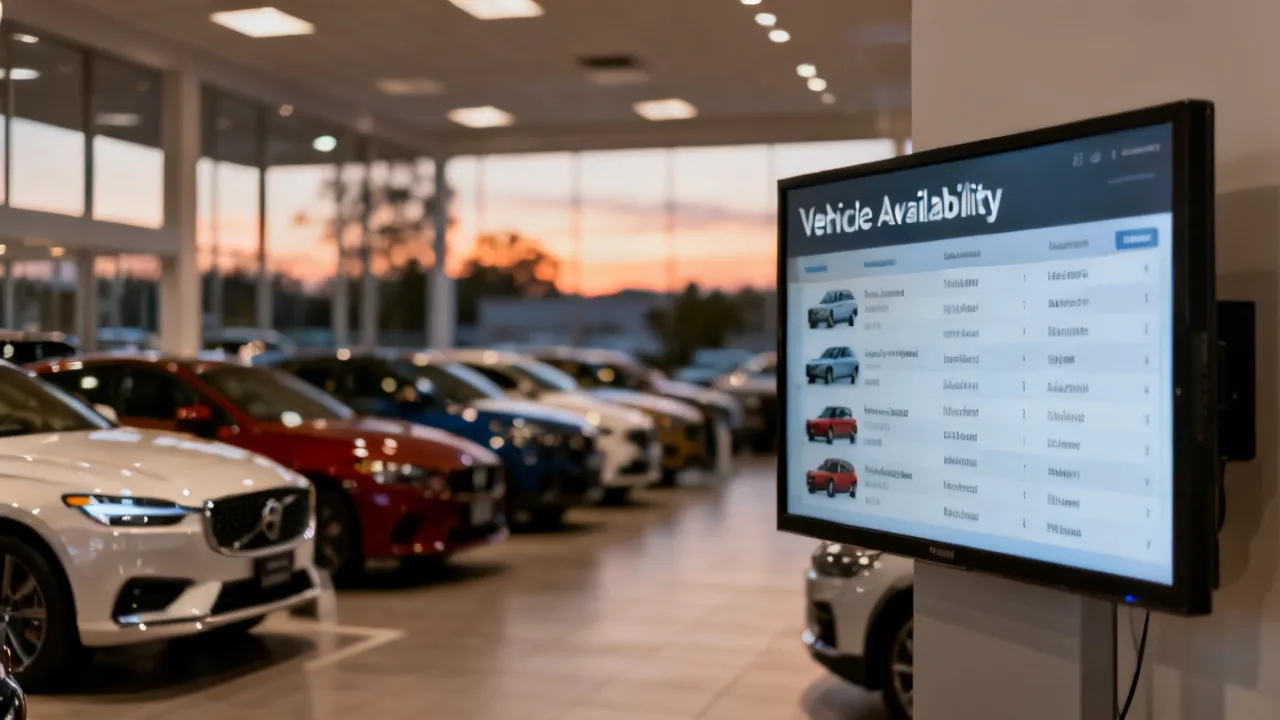
Vehicle Availability Guide for Buying a Car
Vehicle availability determines what you can buy today, what arrives next, and where pricing pressure may appear. This guide explains how to interpret current inventory, use trusted official car trading websites (cars.com, Carmax, Caronsale, and AutoTrader), compare dealer offers, and apply practical steps to find a reliable low-cost vehicle while meeting key purchase conditions.
