This guide explains how Trucker Payroll systems translate hours, miles, and compliance rules into accurate pay for drivers and fleets. It provides objective background on payroll components in trucking, key wage factors, and how to reduce errors. You’ll also find an expert comparison of approaches, step-by-step setup considerations, and a requirements checklist.
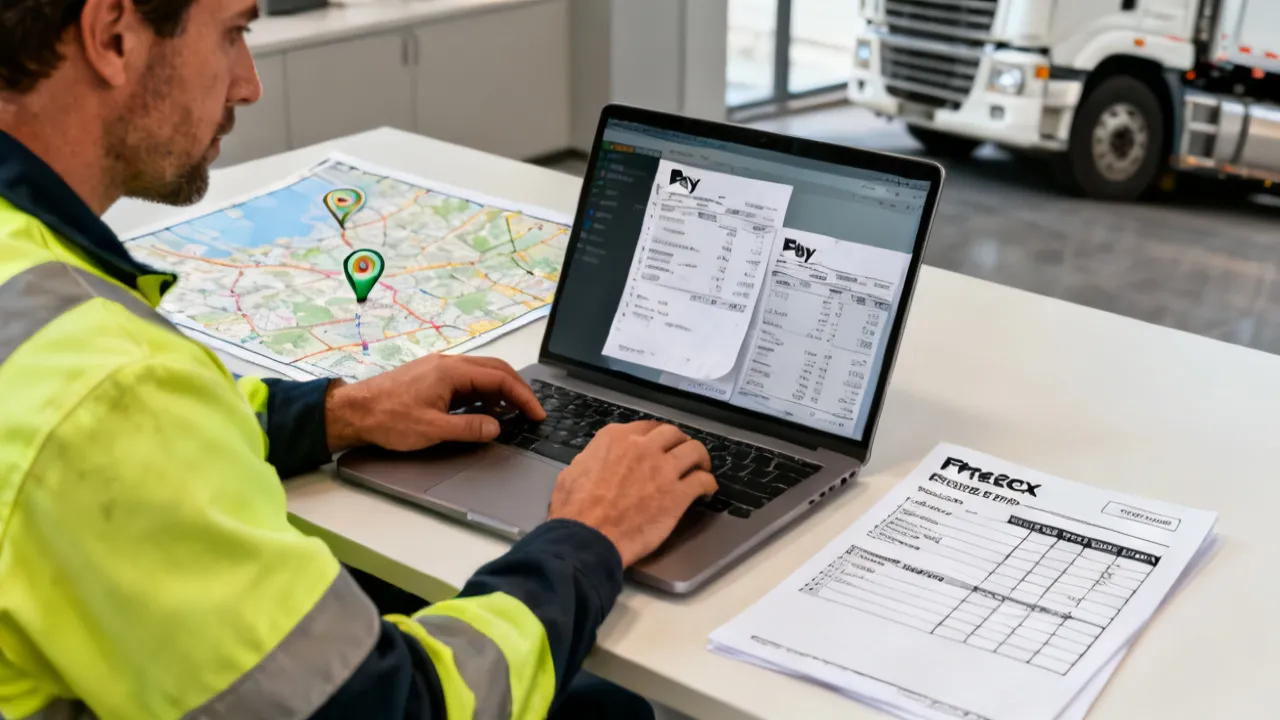
Trucker Payroll sits at the center of daily fleet operations: it converts driving time, pay-rate rules, expense handling, and regulatory obligations into the pay a trucker actually receives. When it’s wrong, disputes escalate quickly—affecting retention, safety culture, and administrative load. A driver who believes they were underpaid will not only challenge that paycheck; they may also reduce discretionary cooperation (late receipts, slower documentation, less accurate reporting) and create a “compliance friction” loop inside the organization. On the other side of the payroll equation, a fleet that repeatedly struggles with corrections can lose the time needed to focus on maintenance planning, dispatch optimization, recruiting, training, and safety. The true cost of payroll in trucking is therefore not limited to accounting—it extends across operations and human performance.
This guide breaks down how to structure trucker payroll with clear wage logic, traceable calculations, and compliance-ready documentation. It expands from the basics of what payroll “typically includes” into deeper operational controls, common calculation pitfalls, implementation requirements, and practical workflow design. The focus remains on accuracy, auditability, and operational usability: payroll should be correct when it’s issued, understandable when questioned, and defensible when reviewed.
In the trucking industry, payroll is rarely a simple “hourly times rate” equation. Depending on the employment model and the fleet’s operating pattern, compensation can blend multiple components that must be handled according to specific policies and labor rules. While the exact mix differs by company, region, and driver agreement, trucking payroll commonly includes the following elements:
Because these elements interact, payroll accuracy depends on disciplined timekeeping, consistent pay rules, and documentation practices that stand up to internal audits and external inquiries. In many disputes, the “problem” is not that the payroll calculation is mathematically wrong; rather, the policy-to-input mapping is unclear, conflicting sources were used, or the system was updated without proper version control.
Very payroll errors come from incomplete or misaligned inputs—rather than from the payroll software itself. Expert fleets typically treat the following items as “source of truth” data, recorded daily and reconciled routinely. The goal is to reduce variability: a consistent input stream allows the payroll logic to produce consistent outputs.
From an industry perspective, the “very reliable payroll operations” are built on transparent mapping: each element of the pay statement can be traced back to a defined policy, recorded input, and a calculation rule. When this mapping is built correctly, the payroll system becomes a tool for execution rather than a mystery engine.
Trucking payroll intersects with labor compliance, wage-and-hour rules, and recordkeeping expectations. Exact requirements vary by jurisdiction and employment arrangement, but fleets generally need to treat the following as non-negotiable pillars. The purpose of compliance-ready payroll is not only legal protection; it is also operational reliability.
For labor compliance context, readers may consult authoritative sources such as the U.S. Department of Labor’s Wage and Hour Division guidance, which addresses overtime and recordkeeping principles relevant to many trucking employers (source: U.S. Department of Labor, Wage and Hour Division). Even when fleets operate across multiple jurisdictions or have mixed comp arrangements, the consistent theme is the same: the company must be able to show what was paid, why it was paid, and what records support the decision.
Compliance-ready payroll also influences how leaders communicate. When the fleet can cite policy language and show a traceable calculation, many disputes become manageable conversations rather than adversarial escalations.
Experienced payroll and fleet operations teams treat trucker payroll as an end-to-end workflow rather than a monthly event. Typical controls include both preventive measures (reduce errors before they occur) and detective measures (catch errors before payroll is finalized).
These steps reduce disputes because drivers can understand their statements, and managers can defend calculations with documented inputs. Importantly, they also reduce administrative load by preventing repeated “back-and-forth” corrections that consume dispatcher time, supervisor time, and payroll staff time.
Many fleets ask about “price” early, but payroll cost is highly variable because it depends on the number of drivers, pay complexity, integrations (e.g., telematics or HR systems), compliance requirements, and whether services are handled in-house or outsourced.
As a practical approach, fleets commonly evaluate payroll solutions and services using a total-cost view:
Rather than relying on a single quoted figure, the very defensible method is to request written pricing from potential suppliers and compare what’s included (setup scope, integrations, corrections support, and reporting). This keeps expectations realistic and prevents cost surprises. Fleets should also ask what the pricing covers regarding timeline guarantees: what happens if the fleet needs additional pay-rule configuration or additional pilot testing due to unique route patterns.
In some cases, the cheapest solution becomes expensive because it increases manual corrections. That is why focusing solely on the provider price without measuring internal labor time can lead to poor ROI decisions.
When evaluating a provider for Trucker Payroll, fleets should focus on operational fit rather than marketing claims. From an industry standpoint, the “right” supplier typically offers:
If your fleet relies heavily on manual processes today, prioritize solutions that reduce rework: correct categorization, standardized input formats, and structured exception handling. Also consider the supplier’s approach to change: can they support policy updates and rate changes smoothly, with version control and historical recalculation boundaries defined?
Another often-missed selection criterion is how the vendor handles audit readiness. In trucking, payroll disputes may require evidence months later. Ask how long evidence is retained, how it is exported, and how quickly the system can reconstruct a prior pay statement.
Even when regulations or standard practices differ by region, fleets often share common operational realities: seasonal scheduling changes, varying availability of documentation, and differences in how drivers submit receipts. In practice, local norms—such as preferred timekeeping habits or how dispatch communicates route changes—shape the quality of inputs that ultimately drive Trucker Payroll calculations.
Therefore, successful deployments “nearby” usually include a short internal training cycle for supervisors and drivers: what documents to submit, when to submit them, and which categories map to which payroll components. Localization is not only about legal differences; it’s also about day-to-day operational behaviors.
For example, two terminals might both follow the same national pay policy, but one terminal might have drivers submit expense receipts daily while the other submits weekly. That difference can create consistent late receipt exceptions, which then affect reimbursements timing and sometimes tax treatment. Similarly, how dispatch communicates “detention” or “waiting time” can influence the completeness of time records, especially if telematics labeling is inconsistent.
To support localization, fleets should implement standardized templates and training checklists that are adapted to local operations without changing the underlying pay logic. This reduces the risk of having different interpretations of the same policy. A good payroll system makes the pay rules consistent; training makes the inputs consistent.
| Approach | Top For | Typical Strength | Main Trade-off |
|---|---|---|---|
| In-house payroll with HR/payroll software | Mid-size fleets with strong internal admin capability | Custom control over pay rules and documentation | Higher internal training and maintenance burden |
| Outsourced payroll processing | Fleets prioritizing reliability and reduced admin time | Professional processing and specialized support | Less direct control over day-to-day adjustments |
| Payroll + telematics integration suite | Fleets with frequent mileage and schedule variability | More consistent input data and fewer manual corrections | Integration setup effort and dependency on system alignment |
| Hybrid workflow (standard processing + exception team) | Fleets with complex edge cases (bonuses, unusual schedules) | Balanced automation with expert review for exceptions | Requires defined exception rules and clear approvals |
Below is a practical, step-by-step approach that an operations-focused payroll specialist would recommend for fleets aiming to improve accuracy without sacrificing speed. The workflow is designed to be resilient: it anticipates common data gaps, defines responsibilities, and makes payroll results traceable.
Before touching software, write down how each driver is paid: hourly/mile rules, overtime triggers, bonus definitions, and reimbursement categories. If policies are unclear, the payroll system will simply produce “accurate confusion.”
To strengthen this step, define the policy at three levels:
Also consider special cases. For example, if you pay for training time, define whether training is counted as hours worked, whether it qualifies for overtime, and how it is recorded. If you have detention pay, specify the definition of “detention,” what evidence supports it, and whether detention is treated as time for overtime calculations.
Choose which systems or documents are authoritative for:
Then document how exceptions are handled when data conflicts (e.g., telematics vs. dispatch records). This is where many fleets struggle: they have multiple data sources, but they never explicitly decide which one “wins” for payroll calculation purposes.
To make this operational, create a hierarchy for each data domain. For example:
Finally, define submission workflows. If drivers upload receipts via a portal, specify the acceptance criteria (file types, submission timestamps, and required fields). If you accept emailed receipts, define whether email timestamp equals submission timestamp.
Create a calculation map that links each payroll line item to a policy rule and an input. For example: mileage pay should have an explicit formula, measurement basis, and rounding method—so drivers can understand pay statement differences.
A traceable calculation map typically includes the following fields for each pay element:
By building this map, you ensure that the payroll system is not a black box. When a driver disputes a paycheck, the fleet can quickly locate the pay code, identify which inputs drove it, and explain or correct the issue with evidence.
Traceability also helps internal teams avoid accidental policy drift. When you update rate cards or bonus definitions, you can confirm which line items are affected and which are not.
Operational discipline is crucial. Define cutoffs for time submissions and receipt intake. If drivers miss cutoffs, specify whether the correction goes to the next pay period and how wage adjustments will be communicated.
When setting cutoffs, consider operational realities:
Also define what happens after cutoffs. A common design is:
These rules reduce disagreement because everyone knows the process boundaries. Without cutoffs, payroll accuracy deteriorates; with cutoffs, corrections become predictable.
Before full rollout, run a test pay cycle and compare computed amounts against prior pay statements. Track discrepancies by category (time, mileage, per diem, bonus). This avoids surprise changes when you go live.
Shadow payroll testing should not be a one-time calculation. A robust approach includes:
Discrepancies are expected during initial setup. The key is documenting them, categorizing root causes, and correcting the mapping or inputs. Over time, your payroll workflow becomes more stable.
Set up an internal review process for anomalies—such as missing time entries or mileage outliers. Require approvals for manual adjustments. The goal is auditability, not only convenience.
Exception queues should include the following design elements:
In well-run fleets, exception queues reduce disputes because drivers know exactly what evidence to supply and where their case is in the review pipeline. They also reduce internal frustration because reviewers aren’t guessing which anomalies matter most.
Drivers don’t need payroll accounting jargon. Provide clear guidance on what information affects their pay and how to correct errors quickly (e.g., reporting missing time punches or late receipt submissions).
Communication should include:
A driver-friendly process reduces the number of disputes and accelerates resolution when issues occur. It also builds trust in the fleet’s payroll system, which can indirectly improve retention and safety culture.
At least quarterly, review payroll exceptions, recurring adjustment reasons, and the consistency of rule application across drivers. If the same type of error repeats, it usually indicates a process gap—not a one-off mistake.
Audits should look beyond total dollars. They should analyze patterns:
When audits reveal patterns, the correct response is often process redesign rather than continued manual corrections. For example, if mileage outliers occur for certain routes, improve dispatch-to-trip-log synchronization or adjust mileage basis rules. If receipt late submissions spike, simplify the submission method and clarify cutoff reminders.
To move from theory to reliable execution, fleets should meet these conditions. Implementation success is rarely about “installing a system.” It’s about building a workflow and ensuring the organization can follow it consistently.
Even high-performing fleets encounter predictable issues. Expert payroll managers often see the same patterns, and the key is to identify these early and correct the underlying process.
Recognizing these pitfalls helps fleets avoid spending time “fixing payroll after the fact.” Instead, they can redesign the workflow so that the majority of pay lines are correct on the first run.
The primary goal is to produce accurate, policy-consistent pay by translating verified work time, mileage or trip data, and defined compensation rules into clear payroll statements with an audit trail.
Many fleets use mixed structures because they balance predictability (hourly floor or guaranteed hours) with performance alignment (mileage or trip incentives). The top choice depends on route patterns, job roles, and the specific driver agreement.
Start with accurate time records, clear overtime eligibility rules, consistent rounding methods (if applicable), and a documented correction process for missing punches or schedule changes. Then ensure each pay statement line item can be traced back to policy logic and time inputs.
A robust workflow defines approved expense categories (e.g., tolls, lodging, meals), required documentation, receipt submission deadlines, and how reimbursements are mapped into payroll (including whether they are treated as reimbursements versus taxable wages under applicable rules).
Qualified suppliers assist with pay rule configuration, integration mapping (time and mileage sources), reporting design, pilot testing, and operational training for admins and sometimes supervisors—so the fleet can enforce consistent payroll inputs.
Pricing is often based on number of employees/drivers, pay-cycle complexity, support levels, and integrations. Because total costs vary by scope, fleets should request itemized quotes and compare what’s included in setup, integration, and support rather than relying on a single headline price.
Fleets generally need documented pay policies, reliable source data for time and mileage, defined exception handling rules, approved access controls, and testing coverage across at least one full pay cycle. Without these, errors tend to surface during peak workload.
Operational practices “nearby” can influence payroll inputs and document submission norms—such as how drivers communicate route changes or how quickly receipts are provided. Even when pay policy is centralized, localized workflows can affect accuracy and must be trained consistently.
Trucker Payroll is best understood as a system: policy definitions, verified inputs, traceable calculations, and disciplined exception handling. When fleets treat payroll as an operational workflow—rather than a reactive monthly task—accuracy improves, disputes decrease, and administrative effort becomes more predictable. Use the comparison table, follow the step-by-step guide, and set clear conditions and requirements so your payroll process supports drivers and strengthens fleet stability.
In the long run, payroll accuracy is also cultural. Drivers experience fairness through consistent pay outcomes, and managers gain confidence through audit-ready evidence. That confidence reduces friction, improves retention, and allows the fleet to focus on what matters most: safe operations, reliable delivery performance, and sustainable workforce planning.
How Progressivecommercial.com Supports Smarter Commercial Buying

Progressivecommercial.com Guide for Buyers and Suppliers

A Practical Guide to Progressivecommercial.com Sourcing

Progressivecommercial.com Sourcing Guide for Buyers

Building Reliable Procurement with Progressivecommercial.com

How Progressivecommercial.com Supports Smart Commercial Buying

How ProgressiveCommercial.com Supports Smarter Business Sourcing

How Progressivecommercial.com Shapes Modern Procurement
How Progressivecommercial.com Supports Smarter Commercial Procurement


Modern Trucker Payroll: Compliance, Costs, and Top Practices
This guide explains how trucker payroll should be structured to support compliance, accurate pay calculations, and predictable operating costs. Background context covers common payroll components in trucking—mileage and hours tracking, overtime rules, deductions, and documentation—then offers a practical framework for building a reliable process using expert-validated controls and audit-ready records.

Trucker Payroll Management for Reliable Compensation
This guide explains how trucker payroll should be structured for accurate pay, compliant records, and predictable budgeting. Trucker payroll refers to the calculation and payment process for drivers and other fleet staff, typically covering base wages, overtime, reimbursements, and legally required deductions. It also addresses timekeeping integrity, contractor distinctions, and audit readiness.

Trucker Payroll: Compliance, Calculation, and Top Practices
This guide explains how to design reliable trucker payroll operations, from pay-rate setup and overtime rules to deductions, benefits, and audit-ready reporting. It provides objective background on common payroll components in trucking, why documentation matters for compliance, and how to reduce disputes while improving cost control. Guidance focuses on practical steps and decision criteria used by fleet managers and payroll specialists.

Trucker Payroll: Compliance, Costs, and Expert Practices
This guide explains how trucker payroll is structured, calculated, and audited to keep drivers paid accurately and compliantly. Background context covers what payroll for trucking typically includes, why payroll systems must match payroll law and trip realities, and how companies reduce errors through disciplined recordkeeping, standardized pay rules, and transparent documentation.

Trucker Payroll: Expert Guide to Fair, Compliant Pay
This guide explains how to structure and manage trucker payroll with accuracy, compliance, and operational clarity. It reviews what “trucker payroll” typically includes, how wage components like hours, rates, and allowances interact, and why consistent documentation matters for audits and retention. Background context is provided objectively, without assumptions.

Trucker Payroll Essentials for Modern Fleet Compliance
This guide explains how to set up and audit trucker payroll with accuracy and regulatory confidence. It reviews what “trucker payroll” typically covers, why pay components require careful recordkeeping, and how fleets can align driver compensation with hours, deductions, and contract terms. Background sections outline key concepts and industry top practices using objective, verifiable sources.
